No. 1BEST OVERALL
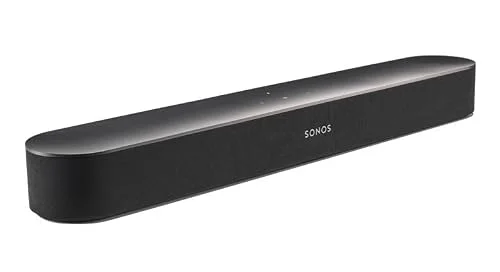
Sonos Beam Gen 2
★★★★½ 4.7
Sound quality
Features
Value
Channels5.0 with virtual Dolby Atmos
Size65 cm — fits under most TVs
ConnectivityHDMI eARC, Wi-Fi, AirPlay 2
Flat, thin TV speakers are the weakest part of almost every modern television, and a soundbar is the quickest fix. We tested six current soundbars against each other and we tell you plainly which one suits which room, TV and budget, and where each one falls short.
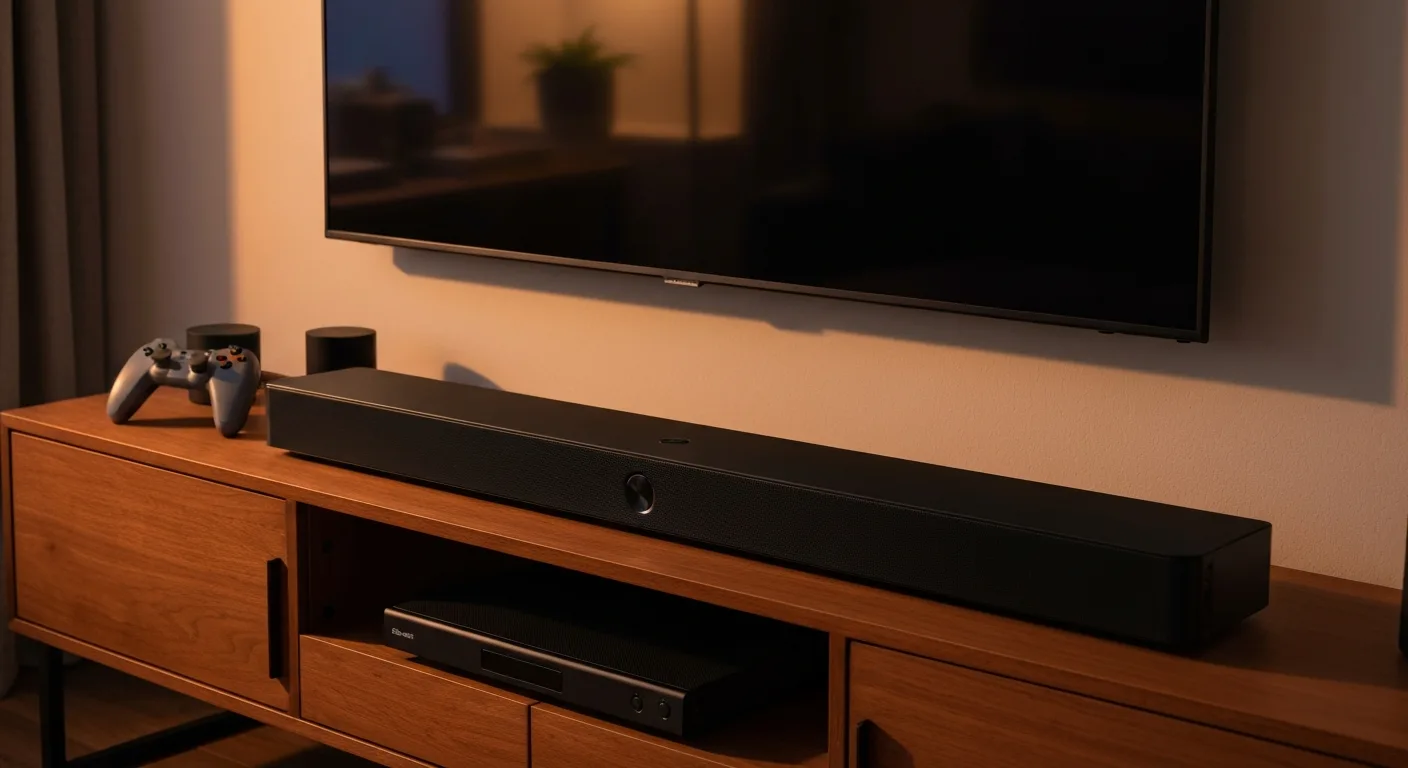 FIG. 01 — TEST BENCH
The short version: our best overall pick is the Sonos Beam (Gen 2) for its class-leading dialogue clarity, easy setup and clean, musical sound. For the keenest spend-to-sound ratio, the Sony HT-S2000 is the best value with real bass from built-in subwoofers, while the compact Yamaha SR-C20A is the best budget bar for a small room. If you want genuine, cinematic Dolby Atmos height effects, the Samsung HW-Q800C is the premium choice, and for a large open-plan room the JBL Bar 1000 with its detachable wireless rears is in a class of its own.
| # | Model | Channels | Size | Connectivity | Rating | Price | |
|---|---|---|---|---|---|---|---|
| 1 | Sonos Beam Gen 2 BEST OVERALL | 5.0 with virtual Dolby Atmos | 65 cm — fits under most TVs | HDMI eARC, Wi-Fi, AirPlay 2 | 4.7 | £429.00 | View |
| 2 | Sony HT-S2000 ATMOS FOR LESS | 3.1ch Dolby Atmos / DTS:X | Built-in dual subs | HDMI eARC, optical, Bluetooth | 4.5 | £399.00 | View |
| 3 | Yamaha SR-C20A BEST BUDGET | 2.1 with built-in subwoofer | 60 cm, desk and bedroom friendly | HDMI ARC, optical ×2, Bluetooth | 4.4 | £169.00 | View |
| 4 | Samsung HW-Q800C HOME CINEMA PICK | 5.1.2 — real upward-firing drivers | Wireless 8" included | SpaceFit auto room tuning | 4.5 | £379.00 | View |
| 5 | Bose Smart Soundbar 600 PREMIUM COMPACT | 5.0 with upward-firing Atmos | 69 cm, low profile | Alexa built-in, AirPlay 2, Chromecast | 4.6 | £549.99 | View |
| 6 | JBL Bar 1000 FULL SURROUND | 7.1.4 true surround | Detachable, battery-powered wireless | 10" wireless included | 4.6 | £799.00 | View |
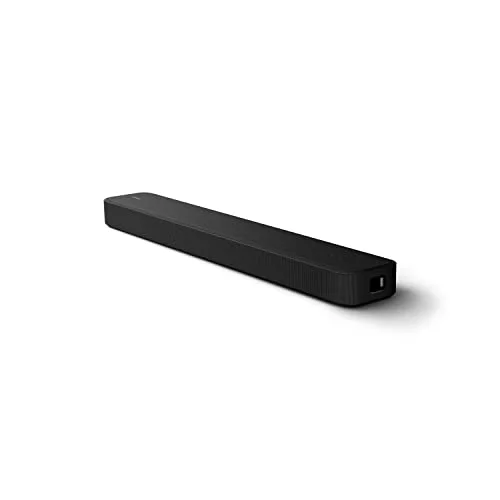

Modern televisions are designed to be thin, and that leaves almost no room inside for proper speakers. The result is sound that is flat, weak and often hard to follow, especially when dialogue gets buried under a film's music and effects. A soundbar fixes that in one step. It sits in a single tidy unit in front of or under your TV, connects with one cable, and immediately gives you clearer speech, fuller music and a sense of weight and space your TV simply cannot produce on its own. For most people it is the highest-impact upgrade you can make to a home cinema setup, and it costs far less than replacing the television.
What a soundbar will not do is turn a small living room into a commercial cinema. A single bar is a clever compromise: it uses careful speaker placement and processing to widen the sound, but it cannot wrap you in surround the way a full multi-speaker system can. That is the honest trade-off, and it is the right one for the vast majority of homes. You get most of the benefit of a separate system from one neat box that sets up in minutes, with no speaker wire across the room and no AV receiver to configure. For a tidy living room, that deal is hard to argue with.
Soundbars are described by their channel layout, such as 2.0, 3.1 or 5.1.2, and getting this right matters far more than the brand on the box. The first number is the count of main speakers, the second is the subwoofer, and the third (when it is there) is the up-firing height channels for Dolby Atmos. As a rough guide:
Crucially, more channels are not automatically better. A big 7.1.4 system in a small room is overkill: you pay for surround and height channels you cannot place properly, and a compact bar would sound just as good and look tidier. The aim is a layout matched to the room and to how much you care about immersive film sound. If you mostly watch the news, sport and dramas, a clear 3.1 bar will serve you better than a sprawling system you never fully set up. Our soundbar buying guide walks through channels, connections and features in full.
Ask people why they finally bought a soundbar and the answer is usually the same: they were tired of reaching for the remote because they could not hear what the characters were saying. Mumbled dialogue is the classic failing of built-in TV speakers, and it is the first thing a good soundbar puts right. A dedicated centre channel, as found on 3.1 and larger bars, is devoted entirely to speech, which lifts voices clear of the music and effects around them. Many bars, including the Sonos Beam and the Yamaha SR-C20A, also add a dialogue or clear-voice mode that boosts speech further at the touch of a button. If your main frustration is following the conversation, prioritise dialogue clarity over raw power.
These are the two questions that decide how much you spend. A separate subwoofer gives the deep, cinematic bass that makes films feel physical, and the better systems include a wireless one you simply plug into a power socket. But you do not always need one: bars like the Sony HT-S2000 build subwoofers into the bar itself and produce real low end on their own, which is ideal for a small room or where floor space is tight. Dolby Atmos, meanwhile, adds a sense of height, with effects that seem to come from above. The most convincing bars use up-firing drivers that bounce sound off the ceiling, as on the Samsung HW-Q800C; cheaper bars simulate the effect. Real Atmos is a genuine upgrade if you watch a lot of films and have a flat ceiling, but it is not essential for everyone.
The single most useful thing you can check before buying is how the bar connects to your TV. HDMI eARC (or ARC on older sets) is the best option: it carries the highest-quality audio, passes the newest surround formats, and lets your existing TV remote control the soundbar's volume, so you do not end up juggling two remotes. If your TV has no HDMI ARC port, an optical cable is the next best thing, though it cannot pass the latest formats. Every bar in our comparison supports HDMI ARC or eARC and includes the cable you need, so for most people setup is a matter of plugging in one lead and choosing the right input. Get this right and a soundbar really is a few-minutes job.
We deliberately picked bars that cover the full range of real needs rather than six near-identical mid-range models. There is a compact all-rounder, a value pick with built-in bass, a true budget bar for small rooms, a premium Atmos bar with a wireless sub, a small bar that still does real height effects, and a full surround system for large rooms. Every model is from a brand that is genuinely available and supported in the UK, and each one earns its place for a specific buyer rather than padding the list. Start by being honest about your room size and what you watch, and you will find your bar here. For everything else, our buying guide covers connections, channels, subwoofers and the features worth paying for.
For most homes the Sonos Beam (Gen 2) is the soundest choice: outstanding dialogue clarity, a clean and musical sound, easy setup and the option to grow into a full Sonos system later. If you want similar quality for less, the Sony HT-S2000 is the best value thanks to its built-in subwoofers, and the Yamaha SR-C20A is the keenest budget buy for a small room. For genuine, cinematic Atmos height effects choose the Samsung HW-Q800C, and for a large open-plan space with proper surround, the JBL Bar 1000 is unmatched here. Whichever you pick, the most important step never changes: match the channel layout to your room and check the connection first. To see exactly how we score them, read our how we test page.
Our best overall pick is the Sonos Beam (Gen 2): it delivers class-leading dialogue clarity, easy app setup with room tuning, and slots into the wider Sonos multiroom system. For the best value we recommend the Sony HT-S2000 with its built-in dual subwoofers, and for a small room or bedroom TV the compact Yamaha SR-C20A is the sensible budget choice.
Not always. A separate wireless subwoofer gives you the deepest, most cinematic bass, which is great for film. But several one-box bars, such as the Sony HT-S2000, build subwoofers into the bar itself and produce real low end without needing somewhere to put a sub. For a small room or if floor space is tight, a single bar with built-in bass is often the better fit.
A Dolby Atmos soundbar adds a sense of height to the sound, so effects can seem to come from above as well as around you. The most convincing bars, such as the Samsung HW-Q800C, use up-firing drivers that bounce sound off the ceiling. Cheaper bars simulate the effect virtually. If you watch a lot of films and have a flat ceiling, real up-firing Atmos is a worthwhile upgrade.
The best connection is HDMI eARC (or ARC on older TVs), which carries the highest-quality audio and lets your TV remote control the soundbar's volume. If your TV has no HDMI ARC port, an optical cable is the next best option, though it cannot pass the newest surround formats. Most soundbars include the cable you need and are working within a few minutes.
It depends on your priorities. A multi-speaker home cinema system can sound more immersive, but it needs speaker placement, wiring and an AV receiver. A soundbar gives you most of the benefit from a single, tidy unit that sets up in minutes, which is why for most living rooms a good soundbar is the more practical choice.