Why bass matters in a soundbar
Bass is the part of the sound you feel as much as hear: the rumble of an engine, the impact of an explosion, the weight under a film score. Thin TV speakers produce almost none of it, which is why action films and music can sound flat and lifeless on a television. A soundbar with good low end restores that physical sense of scale, making films more immersive and music fuller. The deepest, most cinematic bass usually comes from a dedicated subwoofer, a separate speaker built solely to reproduce the lowest frequencies.
That said, more bass is not automatically better. Boomy, overpowering bass that drowns out dialogue is worse than a balanced, tighter low end. The goal is bass that is present and weighty but stays in proportion with the rest of the sound, so films feel powerful without becoming muddy. How much subwoofer you need depends on your room size and what you watch.
Built-in subwoofer vs a separate one
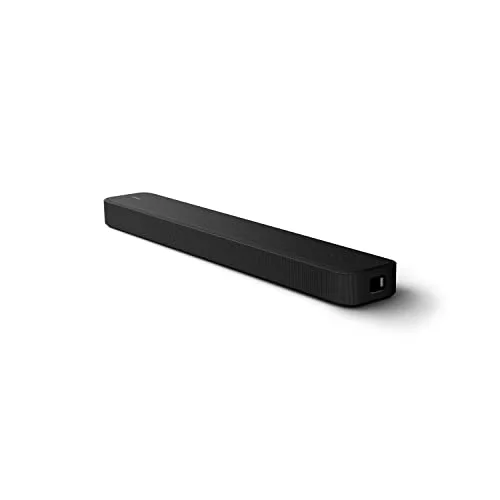
There are two ways a soundbar delivers bass. Some bars build the subwoofers into the bar itself, as the Sony HT-S2000 does with its dual built-in subs, or the compact Yamaha SR-C20A with a single one. This keeps everything in one tidy box and produces genuine low end with no extra clutter, which is ideal for a small room or where floor space is tight. The trade-off is that a bar-sized driver cannot move as much air as a large standalone sub, so the very deepest bass is more limited.
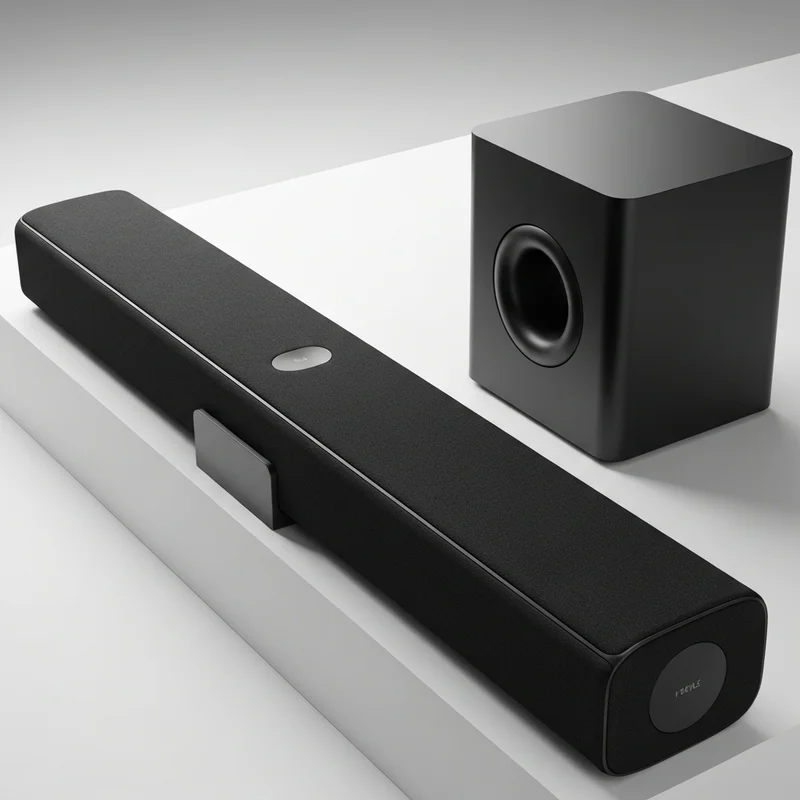
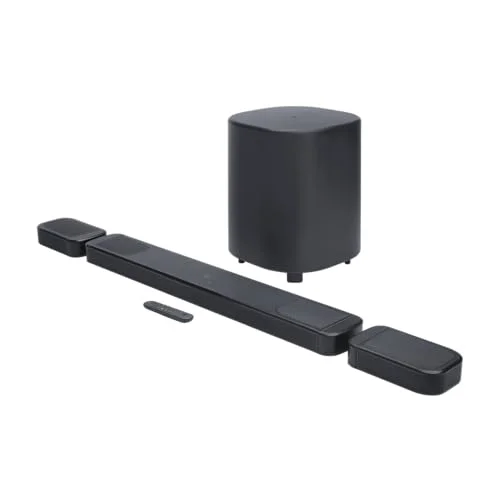
A separate subwoofer, included with bars like the Samsung HW-Q800C and the JBL Bar 1000, gives the deepest, most cinematic bass because a dedicated box has the size to reproduce the lowest frequencies properly. The cost is space: you need somewhere to put it. As a rule, if you have a small room or value tidiness, a bar with a built-in sub is often the better fit; if you have a larger room and watch a lot of film, a separate subwoofer is worth the floor space.
Why wireless subwoofers are the standard
If you do go for a separate subwoofer, you want a wireless one, and happily almost all current soundbar subs are. A wireless subwoofer only needs a power socket; it connects to the bar over a wireless link, so there is no audio cable to run across the room. That makes placement far more flexible and setup far simpler. The subwoofers on the Samsung HW-Q800C and the JBL Bar 1000 pair automatically with the bar, so in practice you just plug the sub in and place it. Wired subwoofers exist on cheaper systems but are far less convenient, and the freedom of a wireless sub is a genuine, everyday benefit.
Where to put a soundbar subwoofer
A subwoofer is more forgiving to place than other speakers because very deep bass is hard to locate by ear, but position still affects the result. A common, effective spot is on the floor near the front wall, roughly in line with the bar, where the bass blends naturally with the sound from the soundbar. Avoid wedging it tightly into a corner: corners reinforce bass and can make it boom and lose definition. If the bass sounds heavy or one-note, try moving the sub a little out from the wall or to a different position along it. Try two or three spots and choose the one where the bass sounds tight and even rather than overpowering. A few minutes of experimenting makes a real difference.